PEDIATRIC EMERGENCY

PEDIATRIC SUPPORT
Pediatric Support
Protocol

Pediatric Support is an app for healthcare professionals, as its correct interpretation and use require specialized training. Its main goal is to support the whole management of Pediatric Advanced Life Support (PALS).

It is also very useful for calculating the doses of the drugs used in a pediatric emergency, in milligrams and milliliters, and the child's fluid therapy.

The first time you open it, you only need to choose the protocol -European Resuscitation Council (ERC) or American Heart Association (AHA)- and the language.

These settings can be changed at any time from Settings.

Available for Android on Google Play and for iPhone and iPad on the App Store.

While Pediatric Support is in use, the device does not go into Sleep Mode.

Pediatric Support in 90 seconds

Every feature, in a minute and a half.
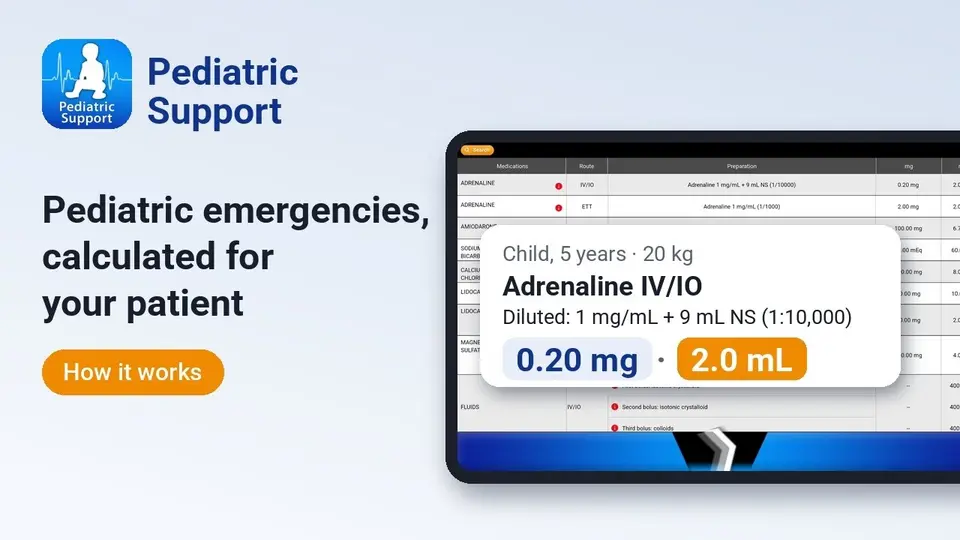
The professional enters the child's Age (years and months) and Weight, and every feature in Pediatric Support is adjusted and calculated automatically.

If you don't know the weight, the app estimates it from the age (p50). If you know it, type it in. Once the data are entered, tap Validate.

For the drugs that require it in clinical practice, just choose the dose per kilo: milligrams and milliliters are recalculated instantly.
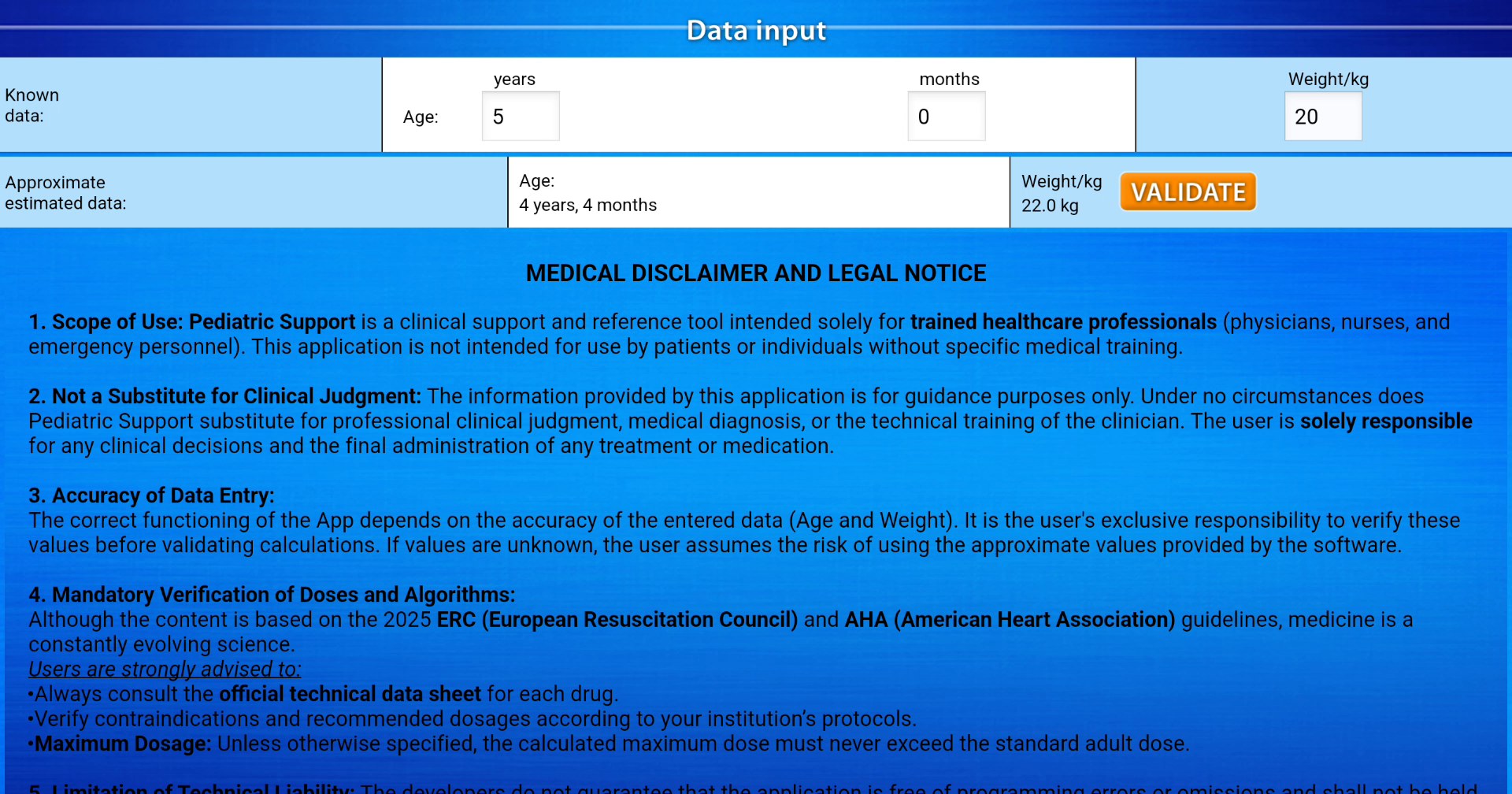
Usage Input

Pediatric Support includes the following features:

Icon

Interventions and Equipment

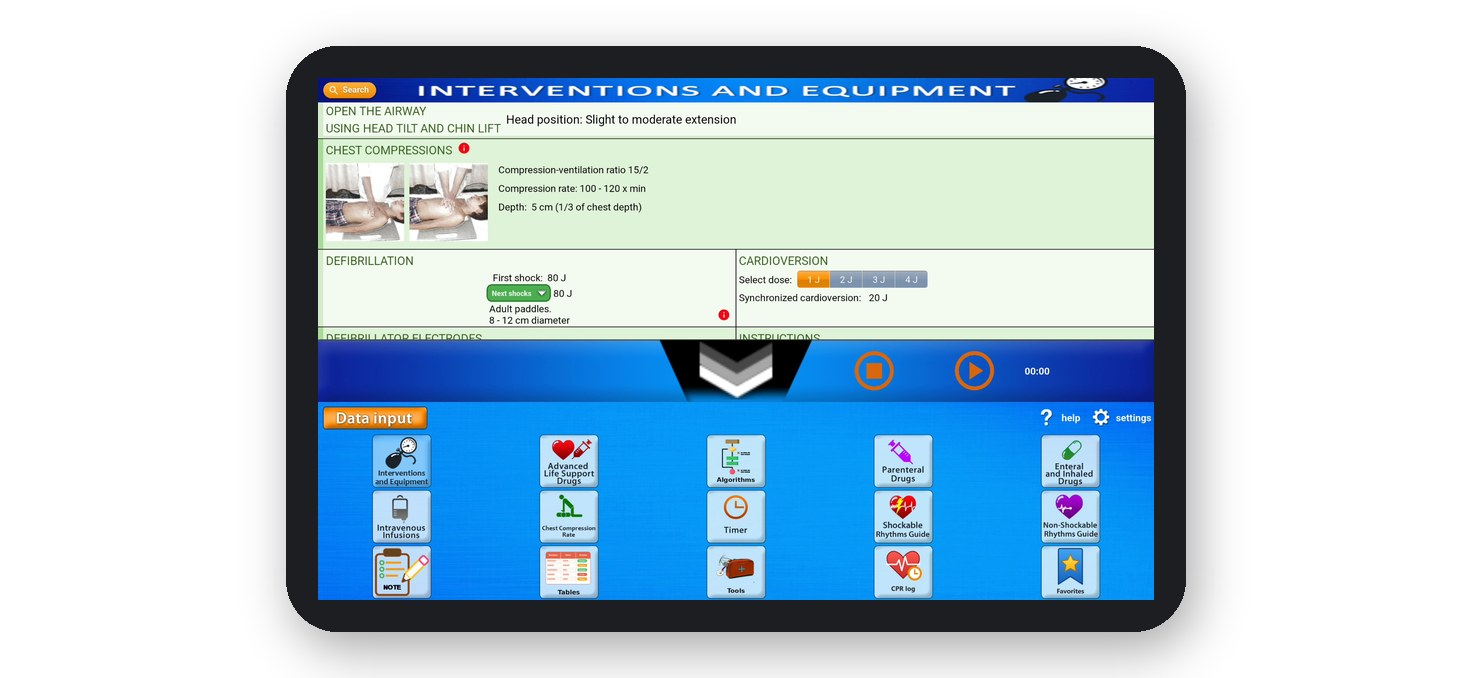
Interventions to perform and equipment needed during Pediatric Advanced Life Support, according to the 2025 ERC and AHA guidelines, adjusted to the child's age and weight.
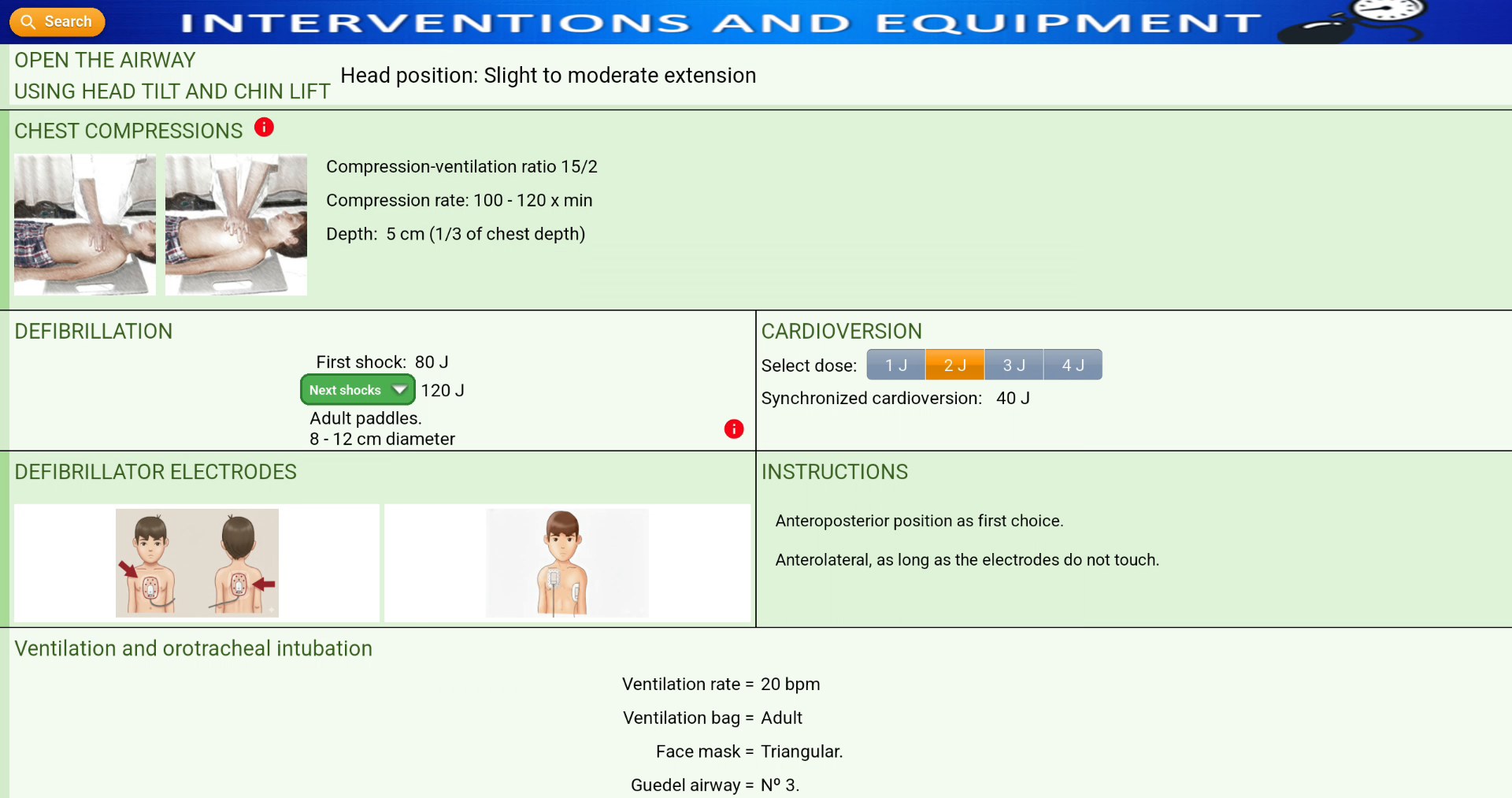
  • Airway opening: head tilt-chin lift and head position.
  • Chest compressions: compression-ventilation ratio, rate and depth.
  • Defibrillation: first and next shocks, already calculated in joules, and paddle size.
  • Synchronized cardioversion: at 1, 2, 3 or 4 J/kg.
  • Defibrillator electrodes: positions and instructions.
  • Ventilation and orotracheal intubation: rate, bag, face mask, Guedel airway, suction catheter, laryngoscope, endotracheal tube and insertion depth, and laryngeal mask.
  • Intraosseous access.
  • Mechanical ventilation: tidal volume, respiratory rate, PEEP, I:E ratio, peak pressure, inspiratory time, flow and mode.
  • Normal vital signs: blood pressure (p5 to p95) and heart and respiratory rate for the age.
Feature image: Interventions and Equipment

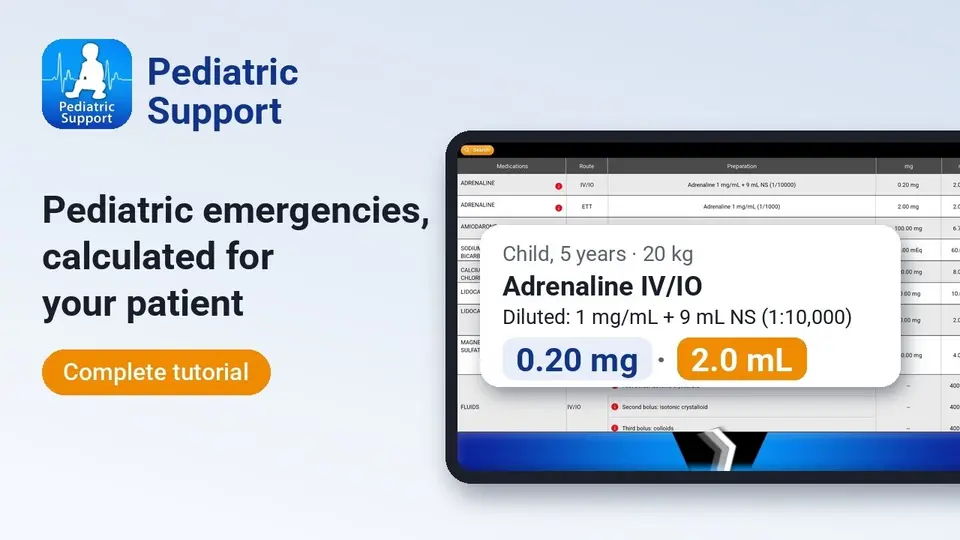
For every drug, Pediatric Support shows the route, how to prepare or dilute it, the milligrams to give for the child's age and weight, the milliliters of the indicated preparation and the drug's indications.

Icon

Advanced Life Support Drugs

The 11 drug cards of the 2025 ERC and AHA guidelines, with preparation, route and the dose in milligrams and milliliters. If several doses are possible, choose the one you need and it is recalculated instantly.
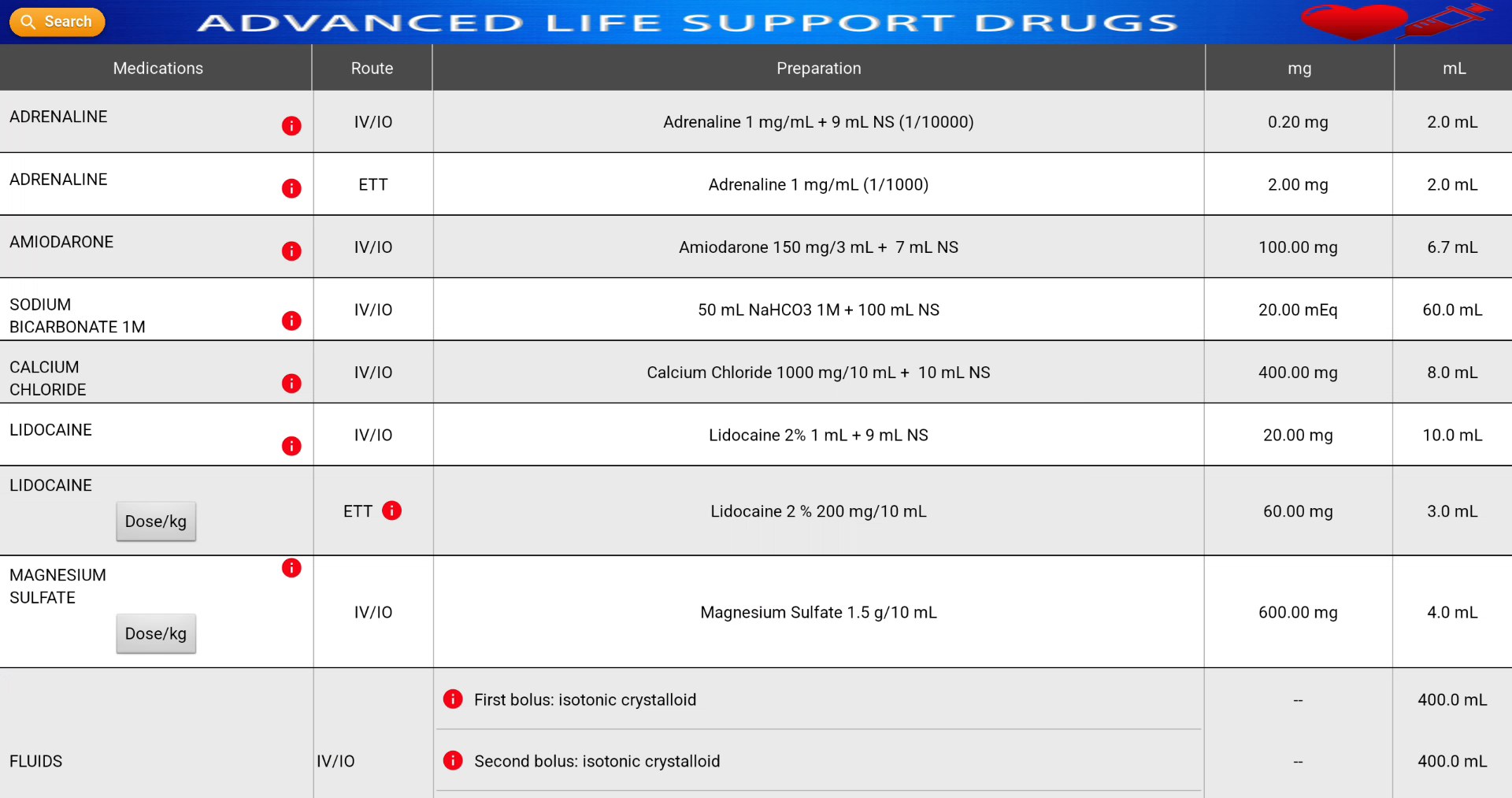

  • Adrenaline (Epinephrine), ETT
  • Adrenaline (Epinephrine), IV/IO
  • Amiodarone, IV/IO
  • Calcium Chloride, IV/IO
  • Fluids: first bolus of isotonic crystalloid, second bolus of isotonic crystalloid and third bolus of colloid or blood, IV/IO
  • Lidocaine, ETT
  • Lidocaine, IV/IO
  • Magnesium Sulfate, IV/IO
  • Sodium Bicarbonate 1M, IV/IO
Feature image: Advanced Life Support Drugs
Icon

Algorithms

10 algorithms of the chosen protocol (ERC or AHA), based on the 2025 guidelines. Images can be zoomed and panned, and any of them can be saved to Favorites.
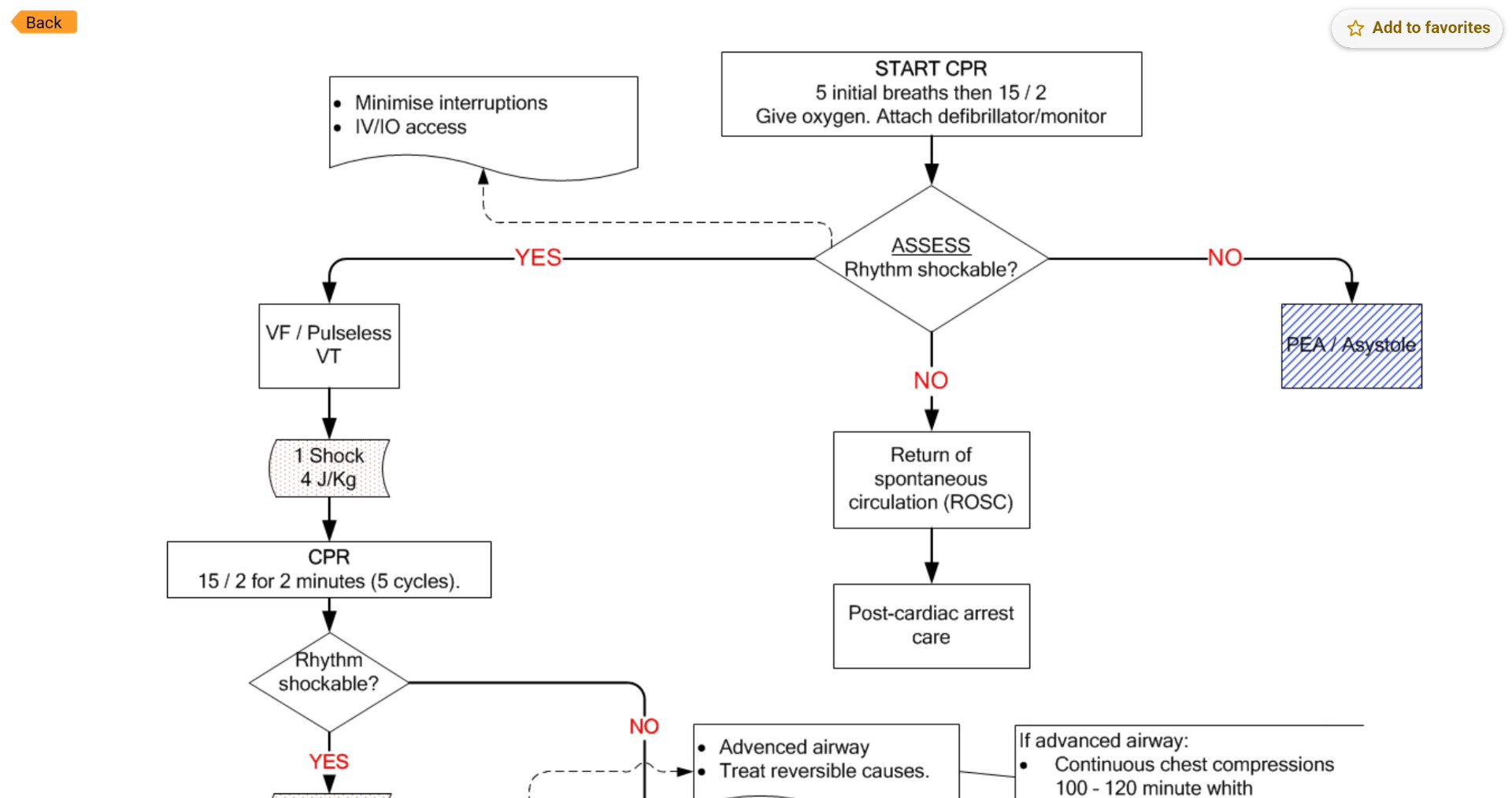
  • Airway obstruction by a foreign body, algorithm
  • Anaphylaxis, treatment algorithm
  • Asthma attack, management algorithm
  • Basic life support, algorithm
  • Narrow complex tachycardia, algorithm
  • Non-shockable rhythms
  • Rapid sequence induction
  • Shockable rhythms
  • Status epilepticus, management algorithm
  • Wide complex tachycardia, algorithm
Feature image: Algorithms

Pediatric Support helps prevent errors: it shows how to prepare drug dilutions and the milliliters to give for the dose adjusted to the child's weight and age. No calculations under pressure, which can lead to mistakes.

Icon

Parenteral Drugs

54 drug cards in alphabetical order. Each shows the route, preparation and indications, and the dose calculated for the patient.
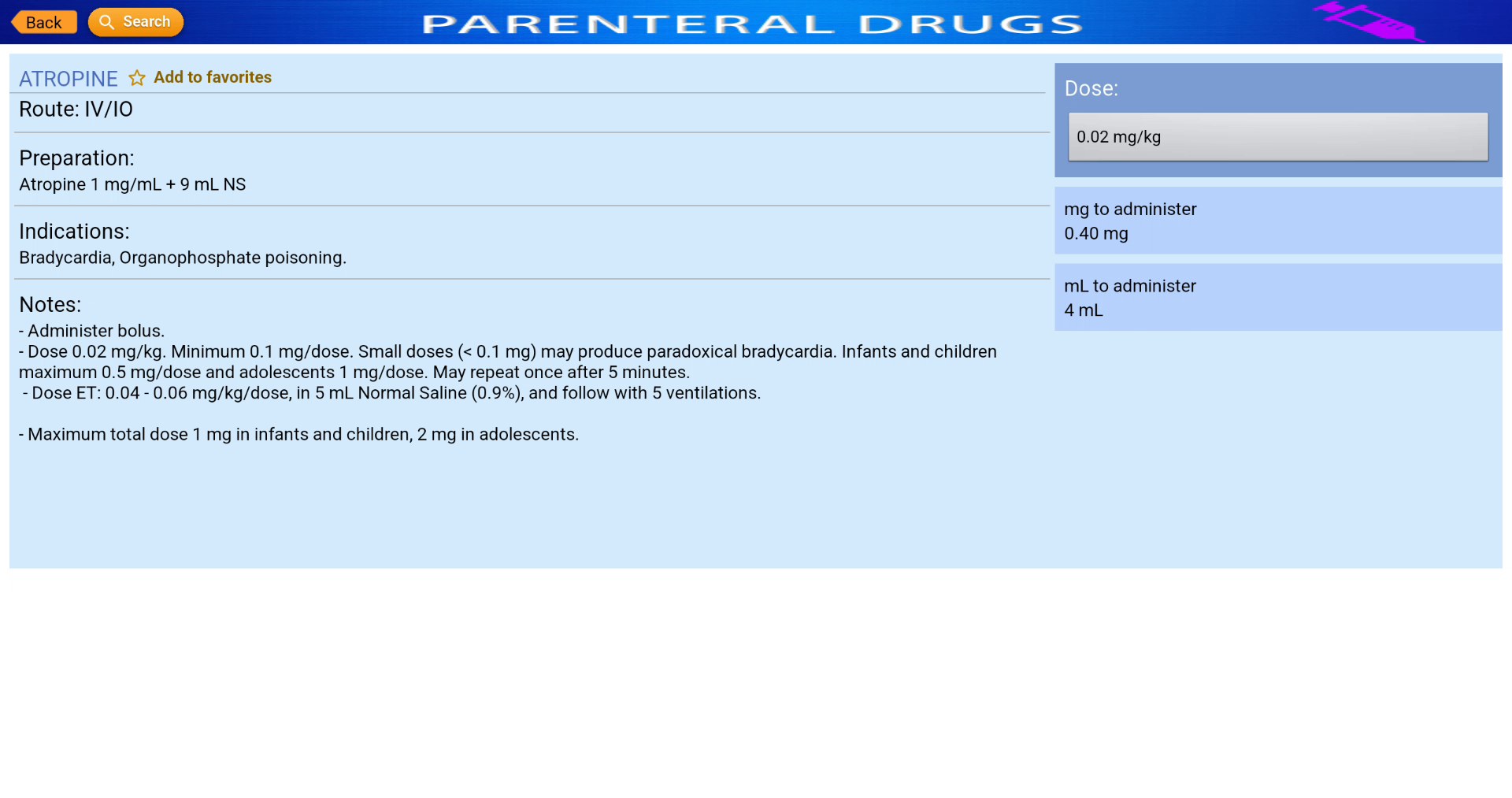
  • They are the drugs commonly used for seizures and status epilepticus, asthma attacks, pain, anaphylaxis, paroxysmal supraventricular tachycardia (PSVT), anesthesia and sedation, poisoning and major trauma.
  • The 54 drug cards are: Adenosine, Adrenaline (Epinephrine) IM, Adrenaline (Epinephrine) IV/IO, Adrenaline (Epinephrine) SC, Amiodarone, Atropine, Biperiden, Chlorphenamine, Dexamethasone, Dexchlorpheniramine, Diazepam, Diphenhydramine IV/IO, Etomidate, Fentanyl, Flumazenil, Furosemide, Glucagon, Glucose, Hydrocortisone, Ketamine IM, Ketamine IV/IO, Ketorolac, Labetalol, Levetiracetam, Lorazepam, Magnesium Sulfate, Meperidine, Metamizol, Methylprednisolone, Metoclopramide, Midazolam, Morphine, Naloxone, Neostigmine, Octreotide, Omeprazole, Ondansetron, Paracetamol, Phenobarbital, Phenytoin, Procainamide, Propofol, Ranitidine, Rocuronium, Salbutamol IV/IO, Salbutamol SC, Succinylcholine, Theophylline, Thiopental, Tramadol, Tranexamic Acid, Urapidil, Valproic Acid and Vecuronium.
Feature image: Parenteral Drugs
Icon

Enteral and Inhaled Drugs

26 drug cards. If a drug has several presentations, choose the one you have and the milliliters are recalculated.
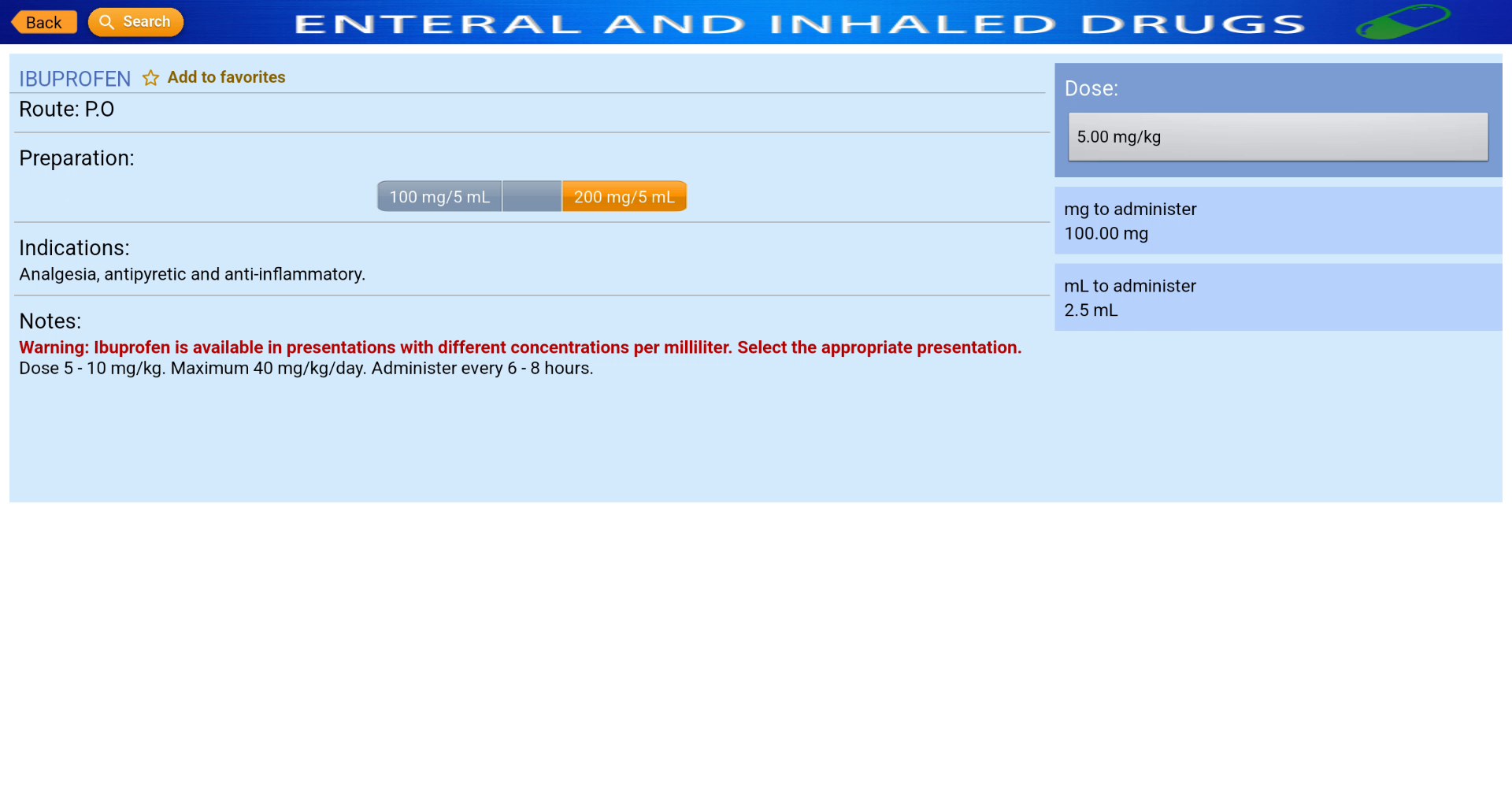
  • By oral, rectal, intranasal or inhaled route. They are the drugs commonly used for seizures, asthma attacks, pain, anaphylaxis, sedation and poisoning.
  • The 26 drug cards are: Acetylcysteine (NAC), Activated Charcoal, Adrenaline (Epinephrine) inhaled, Budesonide inhaled, Codeine, Dexchlorpheniramine, Diazepam rectal, Diclofenac rectal, Fentanyl intranasal, Glucagon intranasal, Ibuprofen, Ipecac Syrup, Ipratropium Bromide inhaled, Ketamine intranasal, Loratadine, Metamizol rectal, Midazolam oral/intranasal, Midazolam rectal, Morphine oral, Naproxen, Paracetamol oral, Paracetamol rectal, Prednisolone, Prednisone, Salbutamol continuous nebulization and Salbutamol inhaled.
Feature image: Enteral and Inhaled Drugs
Icon

Intravenous Infusions

20 drugs, with their preparation and the rate in mL/h. Change the dose and the rate is recalculated.

They are: Acetylcysteine (NAC), Adrenaline (Epinephrine), Amiodarone, Dobutamine, Dopamine, Fentanyl, Flumazenil, Isoproterenol, Ketamine, Labetalol, Midazolam, Nitroglycerin, Nitroprusside, Noradrenaline (Norepinephrine), Octreotide, Propofol, Thiopental, Tranexamic Acid, Valproic Acid and Vecuronium.
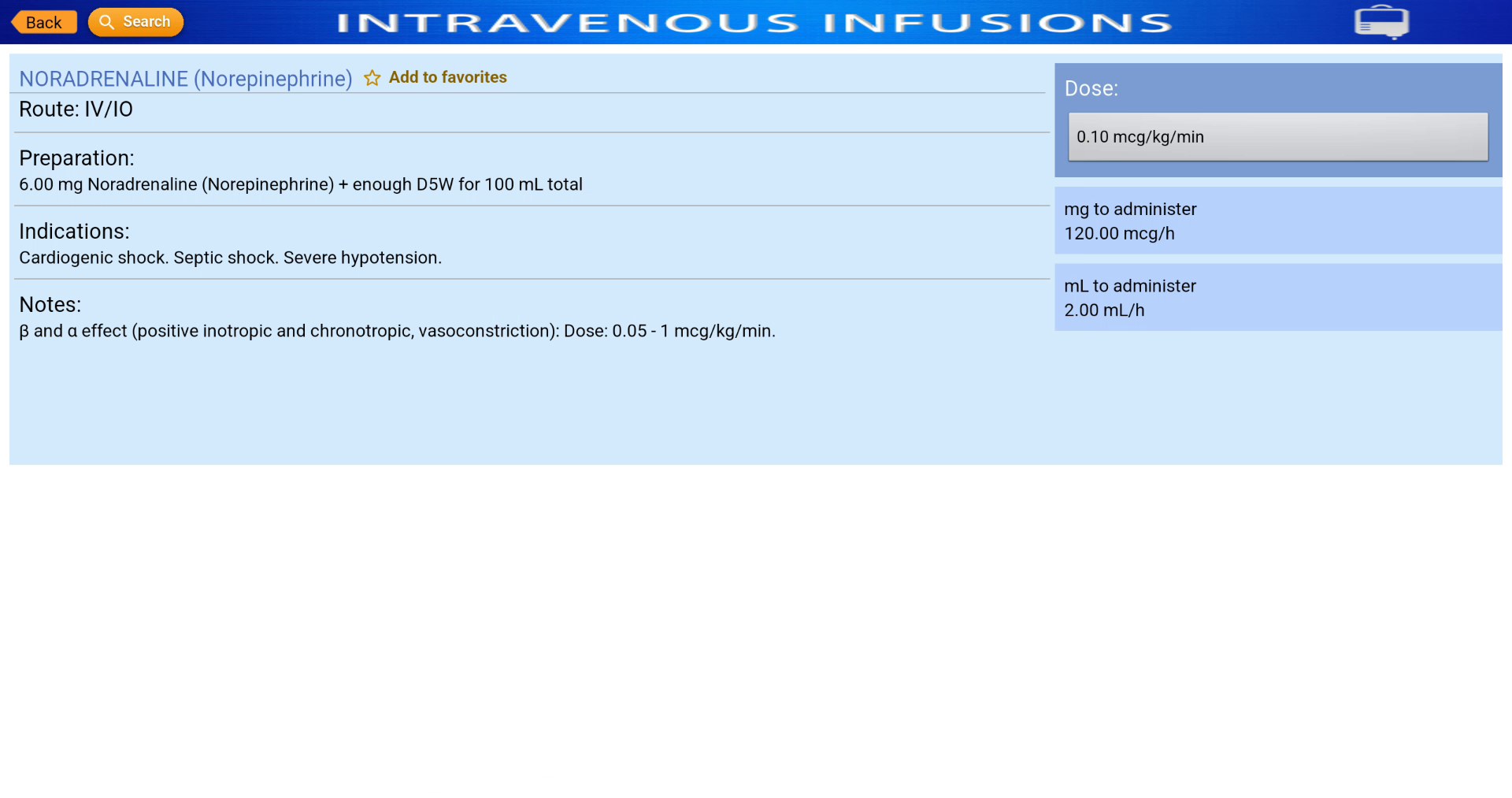
Feature image: Intravenous Infusions
Icon

Chest Compression Rate

A beep at 120 compressions per minute helps keep a steady chest compression rate. It keeps playing on any screen and can be muted at any time.

Icon

Timer

Counts the resuscitation time and is shown in the top bar on every screen.
It can be paused, resumed and reset at any time.

With Pediatric Support you can run the Chest Compression Rate, the Timer, one of the Rhythms Guides and the CPR Log at the same time, while you check any drug, algorithm, table or intervention.

Icon

Shockable and Non-Shockable Rhythms Guides

Shockable Rhythms and Non-Shockable Rhythms audio guides that call out the algorithm sequence of the chosen protocol.
The sequence plays at the timing set by the ERC and the AHA, setting the pace in real time.
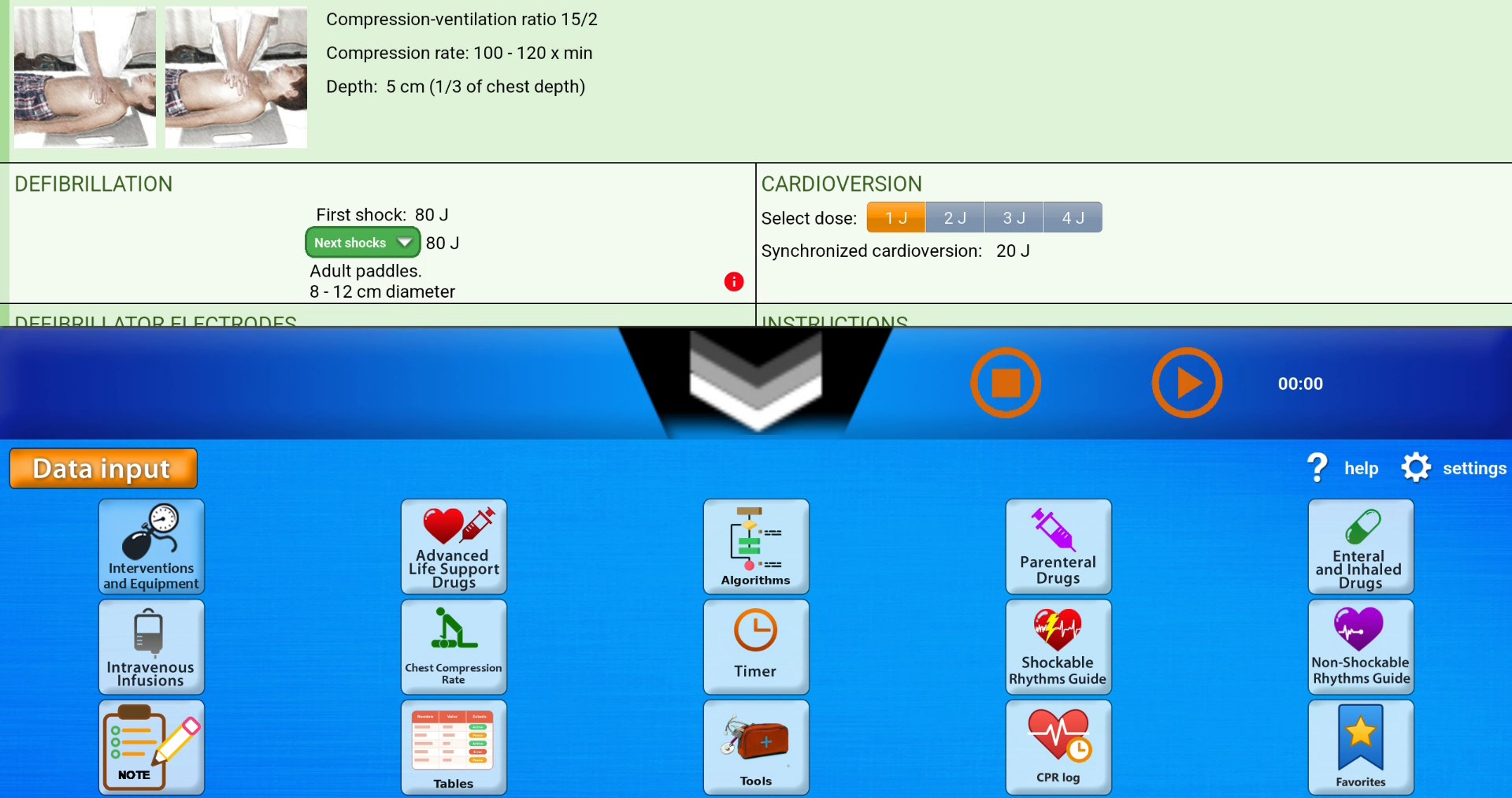
Feature image: Shockable and Non-Shockable Rhythms Guides
Icon

Notes

Pediatric Support includes custom Notes: create, edit and delete them at any time to record patient information, reminders or your own protocols.

Your resuscitation logs (CPR Log) are also saved in Notes.

Everything is stored on the device only and is available without an internet connection.
Icon

Tables

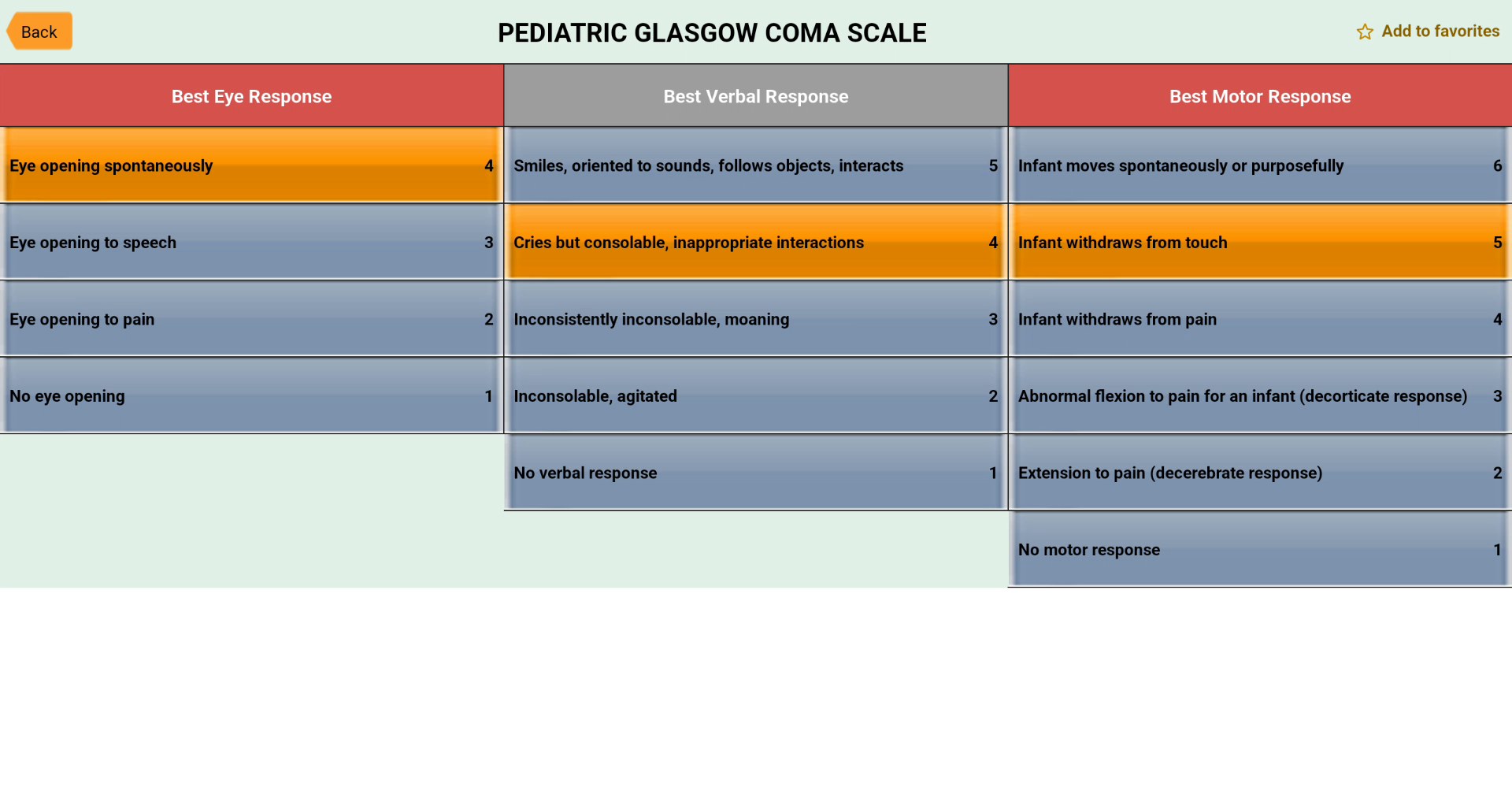
Scores add up as you mark each section and give their interpretation. From Lund-Browder you go straight to the burn fluid calculation.

  • ABCDE, evaluation
  • Glasgow Coma Scale
  • Lund-Browder Chart
  • Pain, treatment
  • Pediatric Assessment Triangle (PAT)
  • Pediatric Asthma Severity Score (PASS)
  • Pediatric Glasgow Coma Scale
  • Pediatric Respiratory Assessment Measure (PRAM)
  • Pediatric Trauma Score (PTS)
  • Pulmonary Score (PS)
Feature image: Tables
Icon

Tools

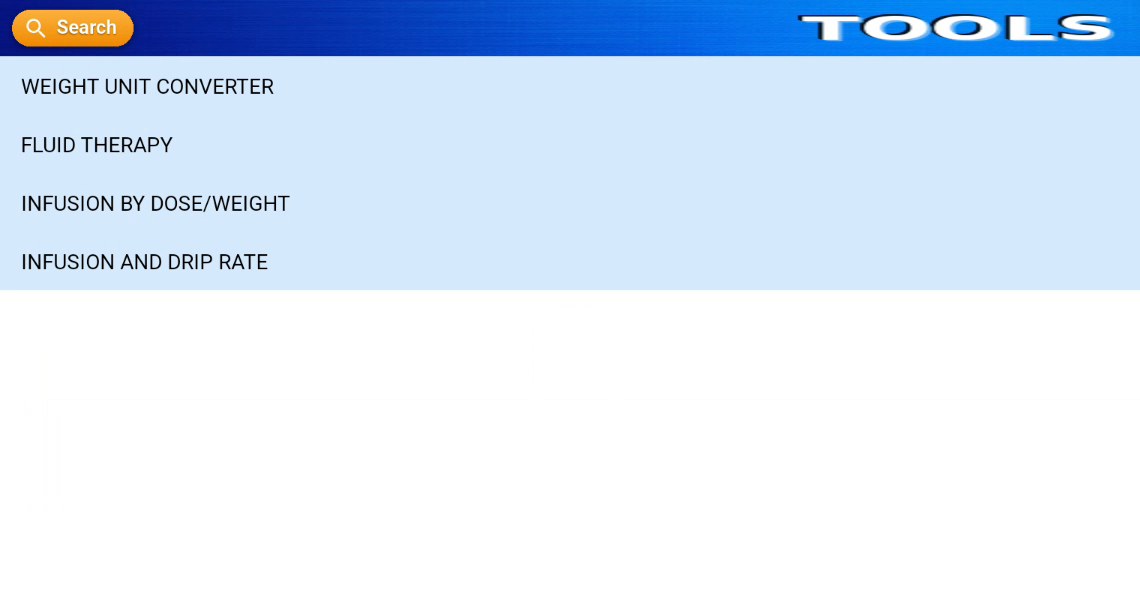
  • Fluid therapy
  • Infusion and drip rate
  • Infusion by dose/weight
  • Weight unit converter
Feature image: Tools
Icon

Fluid Therapy

Calculates the child's fluids from the weight, according to the guidelines listed in the bibliography.
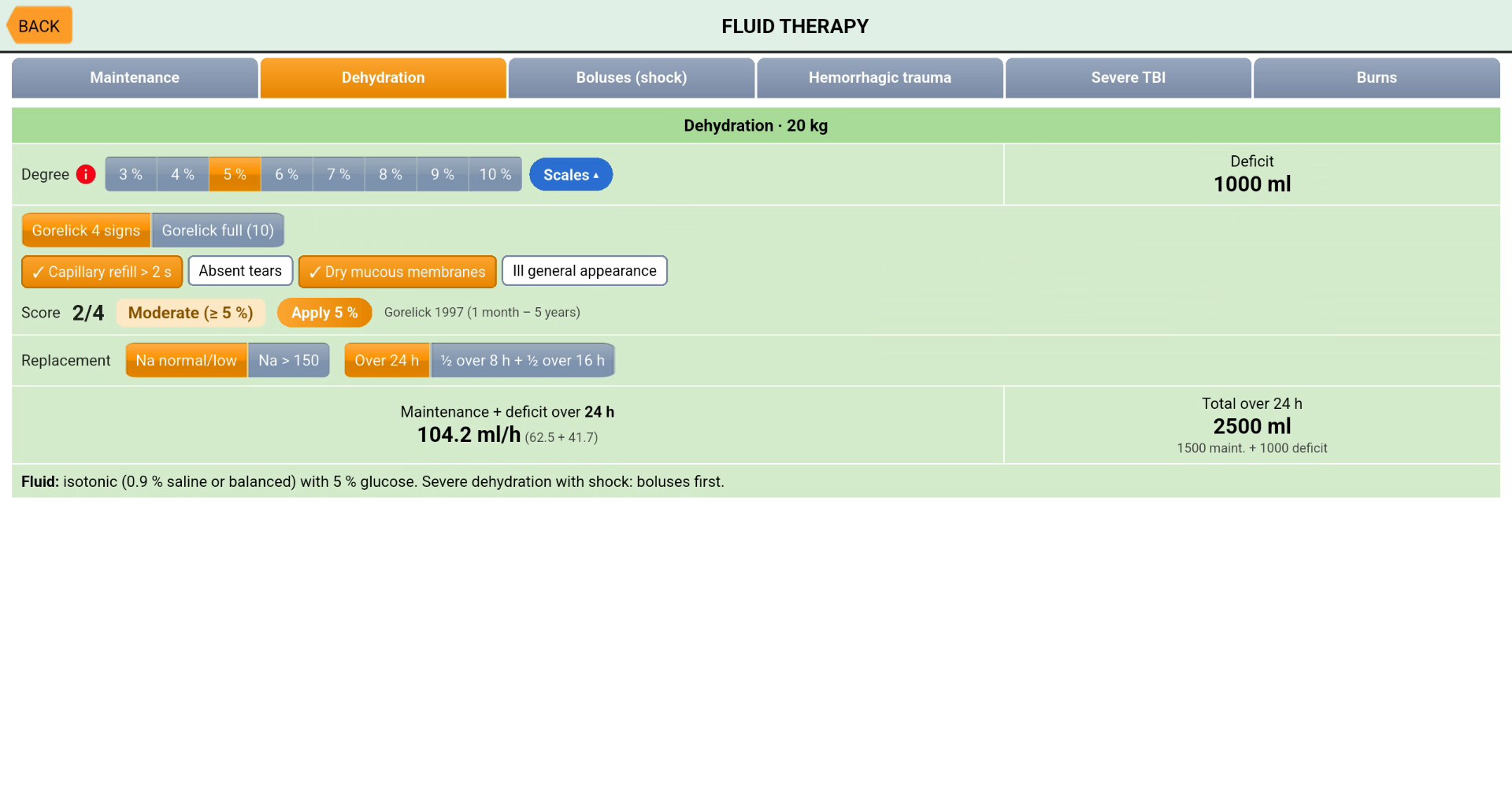
  • Maintenance: Holliday-Segar, with restriction to 100, 80, 70, 60 or 50 % when there is a risk of raised ADH.
  • Dehydration: degree from 3 to 10 %, or worked out with the Gorelick score of 4 or 10 signs; replacement over 24 h or 8 h + 16 h, with normal or low Na, or above 150.
  • Boluses (shock).
  • Hemorrhagic trauma: crystalloid bolus, blood products and tranexamic acid.
  • Severe TBI.
  • Burns: Parkland at 3 or 4 mL/kg/% with the burned surface percentage from Lund-Browder; the split is counted from the burn or from the start.
Feature image: Fluid Therapy
Icon

CPR Log

Records the resuscitation as it happens: one tap and each action is logged with its time.
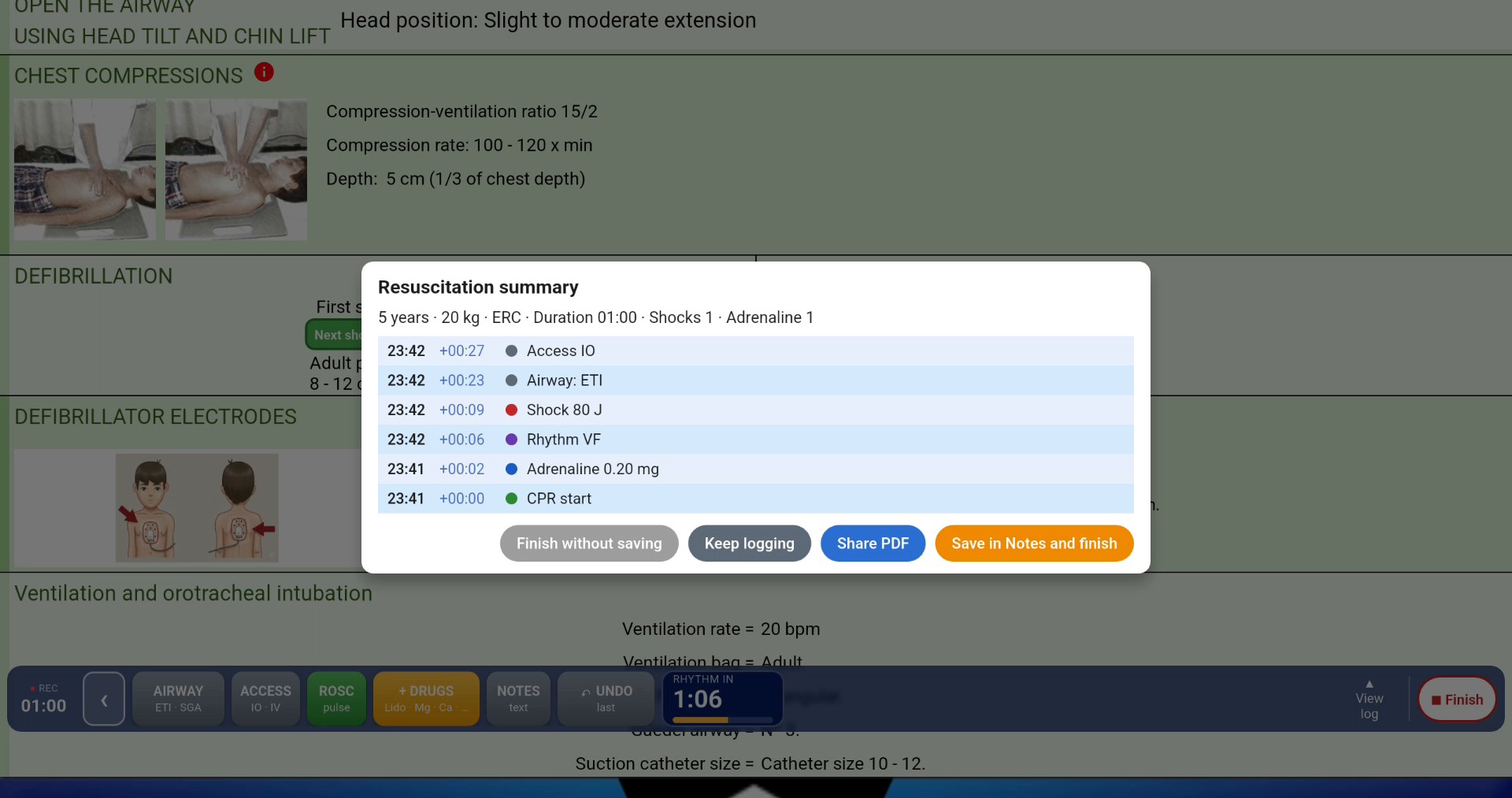
  • CPR start.
  • Adrenaline.
  • Shock, with its energy, and shock not indicated.
  • Amiodarone / Lidocaine.
  • Rhythm: VF, pVT, PEA and asystole.
  • Airway: ETI, SGA (supraglottic airway) and BVM (bag-valve-mask).
  • Access: IO and IV.
  • ROSC (pulse).
  • + Drugs: Amiodarone, Lidocaine, Magnesium sulfate, Calcium chloride, Sodium bicarbonate 1M and Fluids.
  • Notes: free text.
  • Undo: removes the last entry if there is a mistake.
  • View log and Finish: shows the summary, which can be shared as a PDF report or saved in Notes.
Feature image: CPR Log
Icon

Favorites

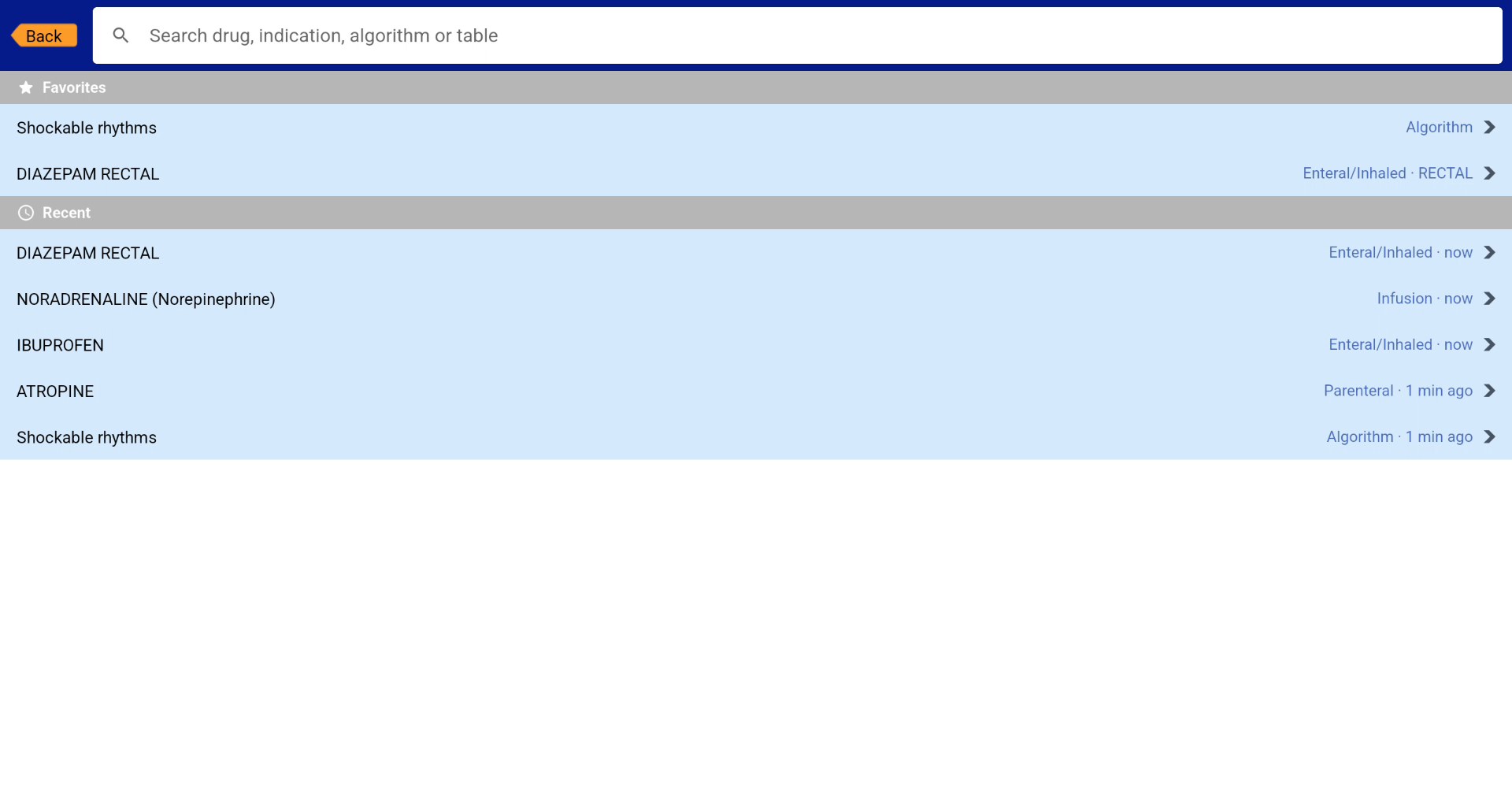
Drugs, algorithms and tables marked with the star, and Recent, what you opened last, always at hand from the menu. They are stored on the device only.

Feature image: Favorites
Icon

Search

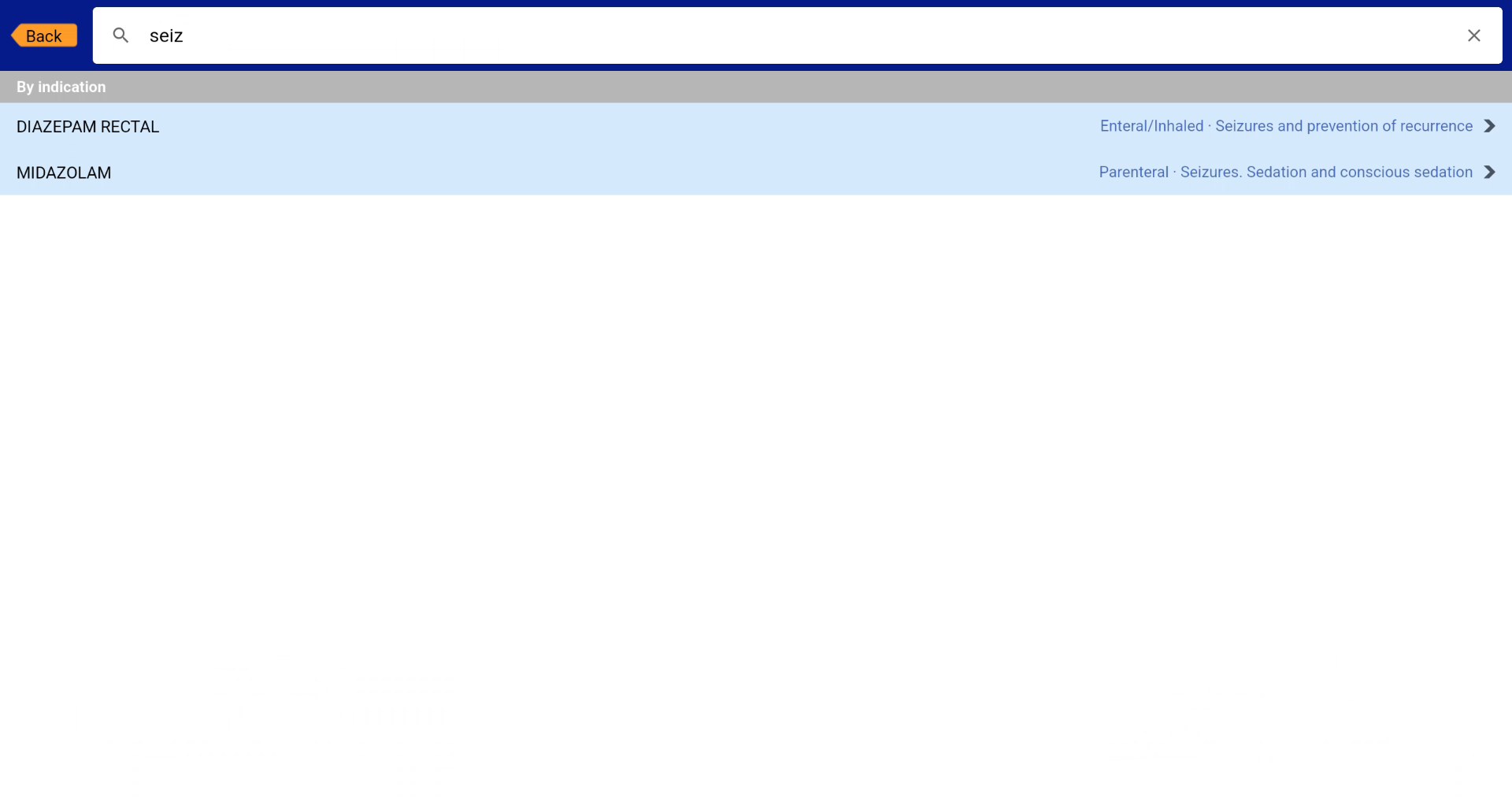
Go straight to what you need: search by drug, by indication (for example, seizure), by algorithm or by table. Each result opens its card and can be saved to Favorites.
Feature image: Search

The audio guides can be paused and resumed at any time; when resumed, they continue from where they were paused. During an audio guide, the Chest Compression Rate keeps playing in the background.

You can switch from the Shockable Rhythms guide to the Non-Shockable Rhythms guide, and back, depending on the child's clinical situation, during the seconds after the Heart rhythm assessment; after that, switching is not possible until the next rhythm assessment.

When switching guides, the app keeps track of the adrenaline doses given and the shocks delivered, and starts the algorithm at the right step.

Pediatric Support can be used for training in the Shockable and Non-Shockable Rhythms algorithms with the Rhythms Guides.


Bibliography
Bibliography
Privacy policy Support